The silent enemy of ham
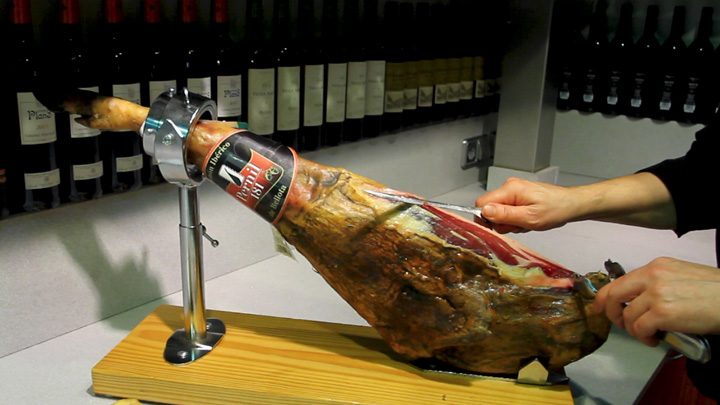
You followed our advice, bought a 100% Iberian acorn-fed ham from Jamonarium, learned how to carve it, and enjoyed the first slices. But now, the ham sits on the ham holder, and the big question arises: how do you store a partially cut ham?
Air, light, and temperature fluctuations are the natural enemies of ham. If not properly protected, the meat oxidizes, toughens, and loses its characteristic heavenly aroma. In this guide, we share the secrets of our master ham makers to ensure that the last slice is as succulent as the first.
1. The ideal place: Where should I put the ham holder ?
Location is the first step. The ham should be in a cool, dry, and dark place .
- Outside the kitchen if possible: Kitchens often experience sudden changes in temperature and humidity due to the stove and oven. If you have a pantry or a cool corner in the living room, that’s much better.
- Keep out of the sun: Direct sunlight oxidizes fat very quickly, giving it a rancid taste.
- Constant temperature: Ideally, keep it between 15°C and 20°C. Never, under any circumstances, put a whole or partially cut ham in the refrigerator (unless it is vacuum-sealed and sliced).
2. The trick of using your own fat (The natural lid)
This is the most important tip for preserving a partially cooked ham . When you start cleaning the ham, you remove thick layers of rind and white/yellowish fat. Don’t throw them away!
- Use: Place these strips of white fat on the cutting surface once you have finished eating. The fat acts as a natural insulator, preventing air from coming into direct contact with the meat.
- Caution: Make sure to use the white inner fat, not the yellow outer rind, as the latter has a bitter taste that could be transferred to the ham.
3. Cover the piece: Cling film or cloth?
There’s a lot of debate about this, but at Jamonarium we’re clear on one thing: ham needs to breathe .
- Avoid cling film : Wrapping the cut area with cling film creates a moisture chamber that can encourage mold growth. Cling film is only recommended if you’re only transporting the piece for a short time.
- Yes to the cotton cloth: Cover the ham holder with a clean, opaque, lint-free cotton cloth. This protects it from dust and light while allowing it to breathe.
4. What to do if mold appears?
Don’t be alarmed. If you see a thin layer of white mold on the bark or cut surface after a few days of not touching it, it’s completely natural in an organic curing process.
- Solution: Simply clean that area with a cloth dampened with olive oil, or remove the first slice if it has become too hard. The rest of the piece is perfectly fine and delicious.
5. The rate of consumption
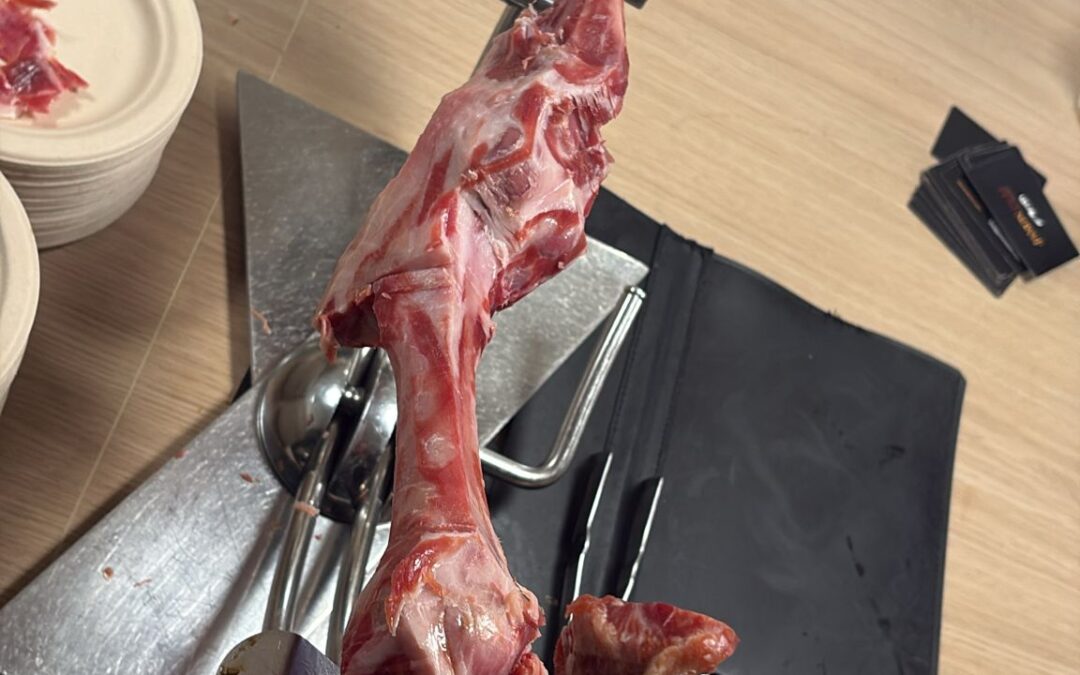
A ham is a living thing that continues to evolve. Once opened, it should ideally be consumed within 21 to 30 days . If you think you won’t be able to meet that deadline, you can bring the ham to Jamonarium so we can slice and vacuum-pack it, guaranteeing an additional 6 months of shelf life.
Conclusion: Patience and care
Knowing how to store a partially eaten ham is just as important as knowing how to choose it. If you follow these steps (natural fat, a cotton cloth, and a cool place), you’ll enjoy the complete gourmet experience right down to the bone. Enjoy!
 Español
 Català
  English
 Français
 Deutsch
 Italiano
 Dutch
Dutch